If Only This Was a Joke: Environmental Myths We Still Believe
April Fools’ Day is built on harmless deception like playful tricks, exaggerated claims and stories designed not to be taken seriously. Yet beyond the day’s jokes, some misconceptions persist long after the laughter fades.
When it comes to the environment, these myths can be surprisingly enduring. Repeated often enough, they shape how people understand climate change, conservation, and the role individuals play in protecting the planet.
The challenge is not a lack of information, but the persistence of ideas that feel true, even when they are not. Among the most common are the myths that shape how people view their role in environmental change.

“Individual Actions Don’t Really Matter”
It is a common belief: that environmental change depends solely on governments and corporations, and that individual efforts make little difference.
On a global scale, systemic change is indeed critical. Yet dismissing personal action overlooks how collective behaviour works. Small, consistent choices like reducing waste, conserving energy, or supporting sustainable products become significant when adopted widely.
More importantly, individual action often shapes broader systems. Consumer demand influences industries, while cultural shifts can drive policy change. What begins as a personal choice can ripple outward into something much larger.
The impact of one action may be small. The impact of many is not.
“Recycling Will Fix Everything”
Recycling is often positioned as the primary solution to waste. While it plays an important role, it is only one part of a much larger system.
In reality, not all materials are recyclable, and not all recyclable items are processed effectively. The emphasis on recycling can sometimes distract from more impactful actions such as avoiding overconsumption and reusing materials in the first place.
The most effective approach follows a hierarchy: reduce, reuse, then recycle.
“Climate Change Is a Future Problem”
For many years, climate change was framed as a distant threat, something that would affect future generations more than the present.
That perception has shifted. Global temperatures have already risen by around 1.1°C above pre-industrial levels, according to the Intergovernmental Panel on Climate Change, contributing to more frequent and intense extreme weather events. Rising temperatures, extreme weather patterns and environmental degradation are already being felt in different parts of the world. The effects may vary by region, but the timeline is no longer abstract.
Understanding climate change as a present reality, rather than a future possibility, changes how it is prioritised.
“Nature Will Recover on Its Own”
Nature has a remarkable capacity for resilience. Ecosystems can regenerate, and species can adapt over time. However, this resilience has limits.
Deforestation, pollution and habitat loss can disrupt ecosystems faster than they can recover. Without intervention, some damage becomes irreversible.
Conservation efforts, from protecting habitats to restoring ecosystems, play a critical role in supporting nature’s ability to recover. The idea that nature will simply “bounce back” without support can underestimate the scale of current environmental pressures.
“Awareness Is Enough”
Awareness is often the first step in addressing environmental issues. Campaigns, documentaries and global events have helped bring climate and conservation topics into mainstream conversation.
But awareness alone does not create change. Information must translate into action, whether through individual choices, community initiatives or policy support. Without that next step, awareness risks becoming passive understanding rather than active engagement.
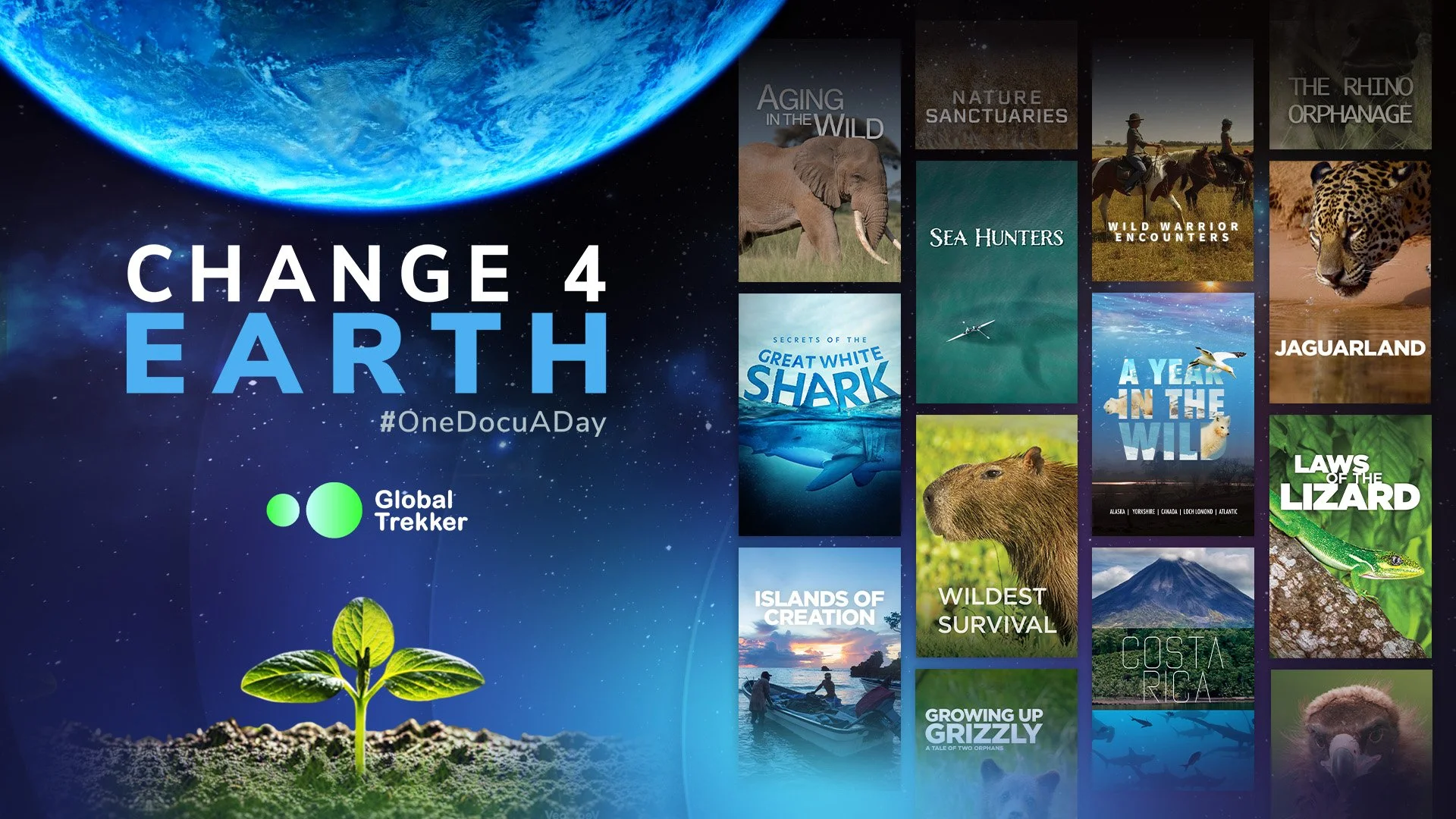
Throughout April, Global Trekker’s Change4Earth campaign highlights environmental documentaries that go beyond headlines by offering deeper insight into climate, conservation and the choices shaping our planet.
Beyond the Myths
Environmental challenges are complex, and simple explanations can be appealing. Myths often persist because they offer clarity in situations that are anything but simple.
Yet understanding these issues more accurately allows for more meaningful responses.
The goal is not perfection but progress, moving from assumption to awareness, and from awareness to action.
A Reality Worth Facing
April Fools’ Day reminds us that not everything we hear should be taken at face value.
When it comes to the environment, however, the stakes are far higher than a harmless joke. The myths we hold onto can shape inaction, delay urgency and blur the reality of what is already unfolding.
Recognising them is not simply about correcting facts. It is about seeing the world more clearly and understanding that meaningful change begins not just with awareness, but with the willingness to act on it.
April Fools’ may be full of jokes, but not all misconceptions are harmless. Discover more stories on sustainability, conscious living and the realities shaping our world, #OneDocuADay, on Global Trekker.
Discover weekly features across Personality & Art, Science & Technology, Business, Destination & Food, or Nature & Environment.
Broaden your mind, open your heart, and inspire your soul with Global Trekker.Follow us: