
After the Fast: The Rituals That Define Hari Raya Puasa
When the crescent moon signalling the end of Ramadan is sighted, a quiet transformation begins. After a month marked by fasting, reflection and discipline, the arrival of Hari Raya Puasa brings a shift from restraint to celebration. Yet the day is not simply about festivity. It is defined by a series of rituals that carry forward the spirit of the fasting month.
Across many Muslim communities, these traditions shape how Hari Raya is experienced by blending faith, family and hospitality in ways that feel both joyful and deeply meaningful.
A Morning of Renewal
Hari Raya often begins early. Families prepare for special morning prayers, gathering at mosques or open prayer grounds dressed in traditional attire. The clothing itself carries symbolic meaning: new garments represent renewal and dignity after the month of fasting.
In Southeast Asian countries such as Malaysia, Indonesia and Singapore, it is common to see families dressed in coordinated colours, with women wearing the elegant Baju Kurung and men in Baju Melayu, often paired with a songkok. This sight is especially familiar as families leave their homes early in the morning, greeting neighbours and relatives along the way.
The prayers mark a moment of gratitude after a month devoted to patience and self-discipline.
Seeking Forgiveness
Among the most heartfelt rituals of Hari Raya is the act of seeking forgiveness from loved ones.
Children and younger family members typically approach their parents or elders with a greeting that expresses humility and reconciliation: “Maaf zahir dan batin” is a request for forgiveness for both visible and unseen mistakes.
This moment often unfolds quietly within the home before the day’s celebrations begin. Though simple, the gesture reflects one of the deeper intentions of Ramadan: repairing relationships and beginning anew with sincerity.
Across cultures, this exchange reinforces the idea that Hari Raya is not only a celebration of the end of fasting, but also a renewal of family bonds.
The Feast After the Fast
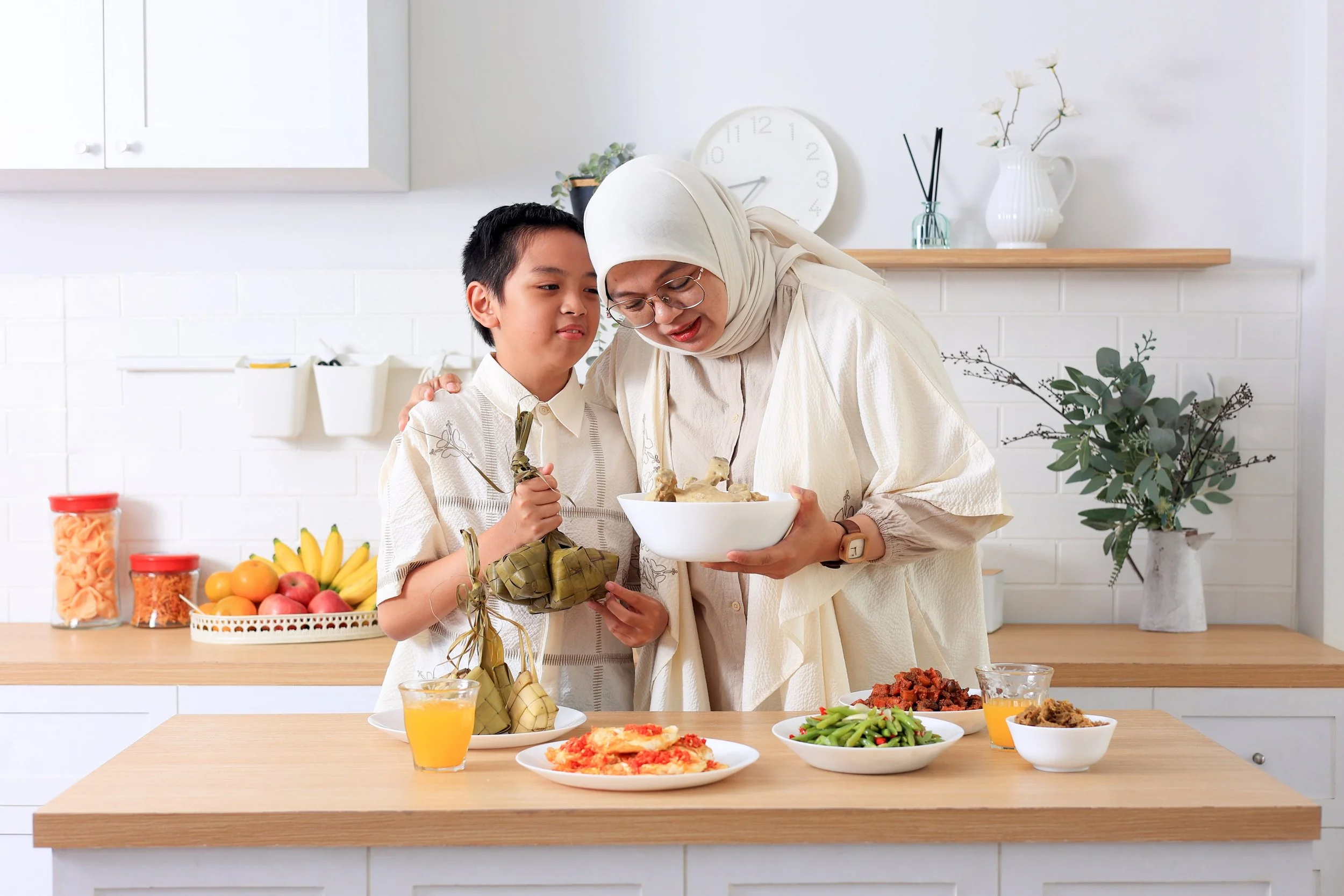
Food plays a central role in Hari Raya, particularly because it marks the return to daytime meals after a month of fasting from dawn to sunset.
The festive table often features dishes that have been prepared carefully over many hours. In Southeast Asia, familiar favourites include Ketupat, served alongside richly spiced Rendang and comforting plates of Lontong with vegetable curry. Other staples such as Sambal Goreng, Serunding and aromatic Satay often appear on the table as well. Colourful trays of traditional kuih or small sweet delicacies like Kuih Lapis and Pineapple Tart add a festive touch.
While recipes and flavours vary across regions, the spirit of the meal remains consistent: abundance shared with others.
After a month defined by restraint, the feast symbolises gratitude rather than indulgence.
The Tradition of Open House
Hari Raya is also a time when homes open their doors to visitors. Friends, relatives and neighbours often spend the day moving from one house to another, exchanging greetings and enjoying festive food together.
In multicultural cities such as Singapore, this tradition is especially visible. Families frequently welcome guests from different backgrounds, turning Hari Raya into an occasion that extends beyond the Muslim community itself.
The open house tradition reflects a central value of the celebration: generosity. The act of sharing food, conversation and hospitality reinforces the communal spirit that Ramadan encourages.
Carrying the Spirit Forward
Although Hari Raya marks the end of Ramadan, the values cultivated during the fasting month are meant to continue long after the celebration.
Patience, empathy and generosity, practised daily throughout Ramadan, find expression in the rituals that follow. The morning prayers, the seeking of forgiveness and the welcoming of guests all echo these principles.
In that sense, Hari Raya is not simply a conclusion to the fasting month. It is a reminder that the discipline of Ramadan was never meant to be temporary.
The celebrations may last for a day or several, but the spirit they honour like gratitude, humility and connection carries forward into the months ahead.
Around the world, celebrations reflect the traditions and connections that shape everyday life. Explore more stories of culture, community and shared moments on Global Trekker.
Discover weekly features across Personality & Art, Science & Technology, Business, Destination & Food, or Nature & Environment.
Broaden your mind, open your heart, and inspire your soul with Global Trekker.Follow us: