
Unearthed Wonders: A Heritage Trail Through Singapore
Singapore is more than gleaming skyscrapers and neon lights. Beneath and behind its modern façade lies a rich tapestry of history, culture and craftsmanship. For the traveller who wishes to dig deeper into the island-city’s heritage, this guide charts a trail through must-visit stops and museums, culminating in the much-anticipated opening of ArCH Square in November.
Foundations & Fragments: The National Story
Begin your journey at the heart of Singapore’s history. The National Museum of Singapore, housed in the former colonial government offices, traces the island-state’s journey from ancient settlement to modern metropolis. Its galleries display artefacts, photographs, and oral histories that help visitors contextualise the subsequent heritage stops.
From there, a short walk brings you to the Asian Civilisations Museum, where the maritime trade networks of Southeast Asia are vividly showcased. These institutions ground your understanding of Singapore’s layered past before you delve into its more specialised heritage venues.
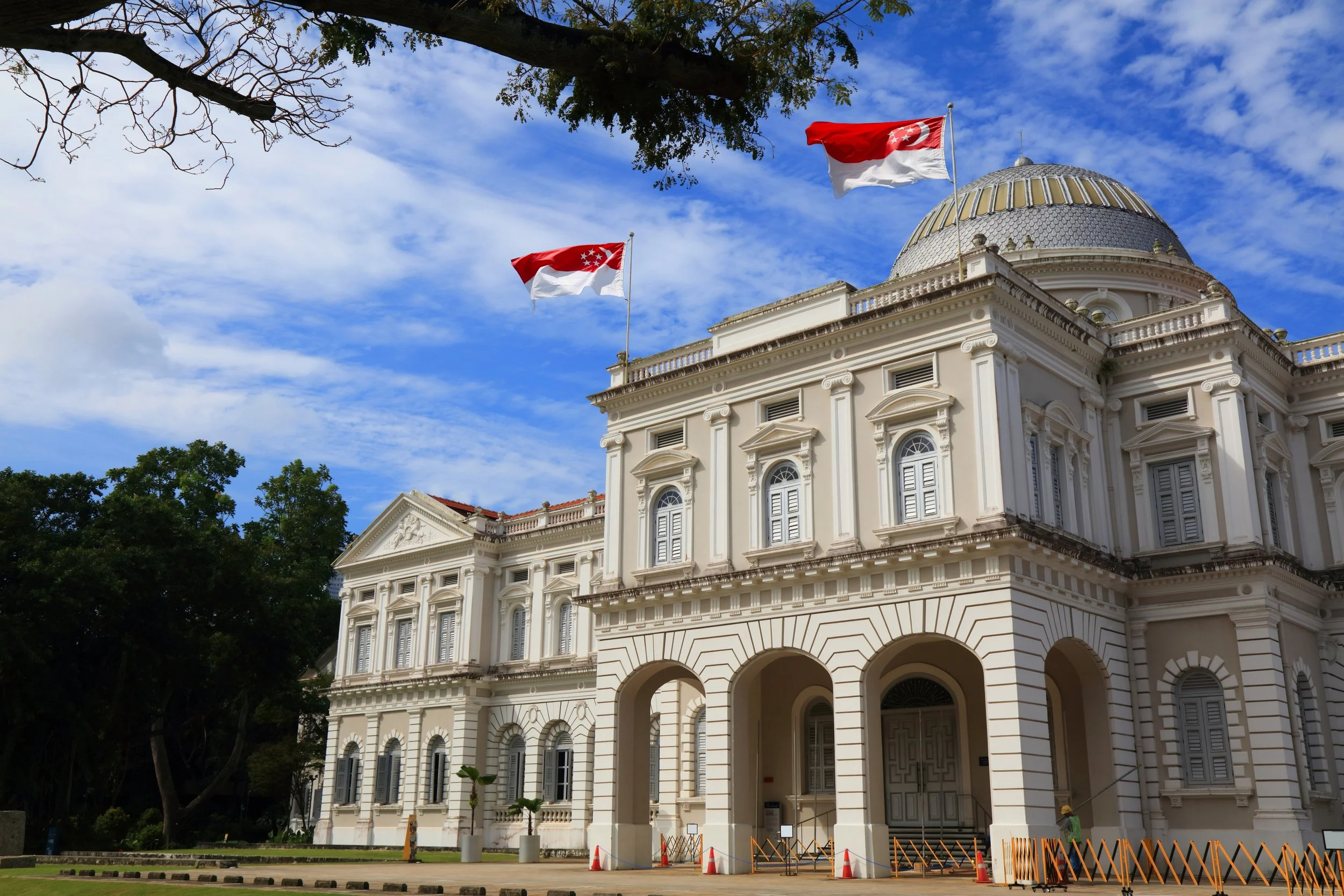
National Museum of SIngapore
Living Traditions: Peranakan & Clan Culture
Just a little further afield lies the Peranakan Museum on Armenian Street, tucked within the charming old Tao Nan School. Here you’ll encounter the world of the Peranakans or Straits-born Chinese communities with richly woven traditions, distinctive dress, architecture and interior design.
Next, visit the Baba House on Neil Road, which is a restored 1890s Peranakan terrace house where you can step inside a typical household of the era. These sites illustrate how tradition, identity and heritage live on in Singapore’s present.
Heritage in the Wild: Temples, Parks & Folkways
Move beyond indoor galleries and explore how heritage thrives in open spaces. At Haw Par Villa, Singapore’s one-of-a-kind outdoor cultural park, you’ll find over 1,000 statues and 150 mythological dioramas that vividly recount Chinese folklore and moral tales. Ongoing restoration and conservation efforts continue to preserve its artistry, allowing visitors to experience this living heritage site in vibrant, open-air form.
Nearby, the historic Thian Hock Keng Temple, built in 1842 by Hokkien seafarers in gratitude to the sea goddess Mazu, offers a glimpse into the spiritual heart of early immigrant life. Its elaborate carvings and lacquered beams showcase centuries-old craftsmanship rooted in devotion and community.
A short drive away, Bukit Brown Cemetery provides a contemplative counterpoint: a vast resting ground where ornate tombs, poetic calligraphy and nature intertwine, preserving stories of Singapore’s pioneers in a landscape reclaimed by greenery.
Further north, Kong Meng San Phor Kark See Monastery stands as the city’s largest Buddhist temple complex, where modern architecture meets ancient ritual. Within its courtyards and shrines, one encounters a living expression of faith and continuity.
Together with Tan Si Chong Su Temple built in 1878, these sites reveal how Singapore’s heritage lives not only in objects and galleries but also in landscapes, beliefs and the quiet endurance of shared memory.
New Ground: ArCH Square & Archaeology Meets Heritage
Recent years have also seen a broader understanding of what heritage means. The NUS Lee Kong Chian Natural History Museum invites visitors to explore the natural foundations of Singapore’s story, from prehistoric fossils to modern conservation efforts. Rooted in the legacy of the 19th-century Raffles Museum, it highlights how environment and biodiversity have shaped the island’s history and way of life.
Having covered the well-known pillars of Singapore heritage, the trail arrives at a fresh and exciting frontier. In November 2025, HeritageSG’s ArCH Square opens at 125 Jalan Sultan in Kampong Glam. It will be Singapore's first dedicated centre for archaeology and intangible cultural heritage (ICH).
Here, visitors can see artefacts unearthed in recent digs, such as a 19th-century uri pot discovered at Sultan Gate, and participate in workshops that teach archaeological processing. The centre builds on decades of archaeological research in Singapore, from Fort Canning to Empress Place, and marks a new chapter in how the nation preserves and presents its past. ArCH Square brings together material culture and living traditions in one space, making heritage active rather than static.

Mapping a Meaningful Route: Practical Tips & Connections
To make the most of this heritage trail, here are some ways to plan your visit and explore meaningfully:
Use the MRT and local buses to travel between central museums and neighbourhood sites.
Begin at the National Museum or Asian Civilisations Museum to build your historical framework.
Dedicate half a day each to the Peranakan Museum and Baba House before heading outward to explore open-air heritage.
Include a visit to the NUS Lee Kong Chian Natural History Museum, where Singapore’s natural heritage and biodiversity take centre stage and a reminder that the nation’s story begins with the land itself.
Plan a western loop for Haw Par Villa and Bukit Brown Cemetery, or a central route that includes Thian Hock Keng Temple and Tan Si Chong Su Temple.
If time allows, venture north to Kong Meng San Phor Kark See Monastery for a serene encounter with Singapore’s living Buddhist traditions.
Reserve time when ArCH Square opens and check for workshop schedules ahead of your visit.
Singapore residents can also take advantage of the SG Culture Pass, which offers access to selected museums and heritage institutions across the island. It’s a wonderful way to rediscover familiar landmarks and explore new ones while supporting local culture.
For tourists, various attractions and museum passes are available that provide convenient access to key heritage sites and public transport networks. These options make it easy to explore Singapore’s historical districts and cultural landmarks at your own pace.
Bring water and wear comfortable shoes: Singapore’s heritage isn’t just inside, it’s all around you.
Reflections & Routes Forward
Singapore’s heritage is not frozen in the past. It lives in architecture, customs, artefacts and community practices. From grand galleries to hidden shophouses, and from ancient pottery to folk rituals, each stop on this trail reveals how the city-state’s identity has been shaped — and continues to evolve.
ArCH Square symbolises the next chapter in this story: one where archaeology and intangible traditions sit alongside each other, inviting visitors to engage and participate. This November, be among the first to see how heritage is being unearthed and re-imagined.
Feed your curiosity with stories that celebrate culture, history, and discovery on Global Trekker.
Explore weekly articles on Personality & Art, Science & Technology, Business, Destination & Food, or Nature & Environment on this space.
Broaden your mind, open your heart, and inspire your soul with Global Trekker.Follow us: